A humble servant of devotees
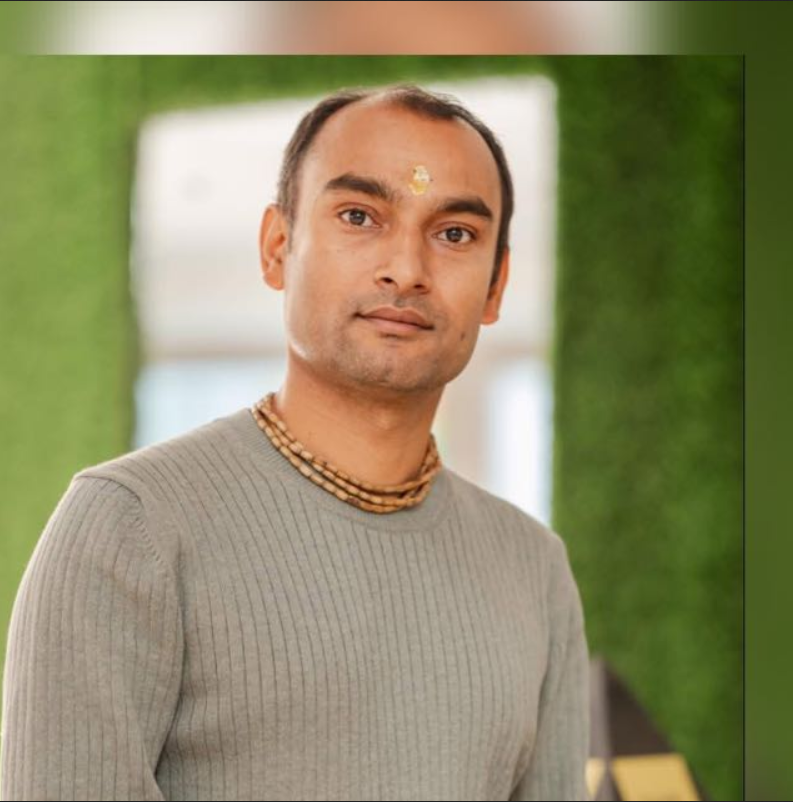
Prakash Bolakhe Ānanda, known in spiritual circles as Kaushikānanda, walks the path of bhakti not as a teacher or authority, but as a learner and sevaka one who seeks grace through service to devotees. His life is not presented as an achievement, but as an ongoing sādhanā, shaped by land, lineage, labor, and love, and offered humbly at the feet of bhaktas.
His journey reflects a simple truth of the devotee path:
service purifies, remembrance sustains, and humility protects devotion.
Lineage as Responsibility, Not Identity
Prakash is born into the Kaushika Gotra, traditionally traced to Sage Vishwamitra whose life reminds seekers that inner transformation matters more than worldly power. From this lineage comes not pride, but a responsibility toward discipline, self-restraint, and continual inner work.
From his mother’s side, he carries the Kashyapa (Kasap) Gotra, associated with Sage Kashyapa, revered as a progenitor of diverse life forms. This lineage inspires reverence for nature, balance, and coexistence, shaping a devotional outlook that sees all beings as part of one sacred order.
Through marriage, he is connected to the Atri Gotra, the lineage of Sage Atri and Mother Anasuya symbols of purity, compassion, and steadfast household dharma. This influence strengthens his commitment to the gṛhastha path, where devotion is practiced not by renunciation of the world, but by serving within it.
Lineage, for him, is not a claim it is a call to live responsibly and serve quietly.
Birthplace: A Land that Taught Devotion
He was born in Bolakhe Gaun, Kushadevi, a hill region traditionally revered as being under the protective grace of Devi Kusha. More than geography, this land functioned as a living teacher.
- Bari (rain-fed terraces) taught patience and surrender
- Kheta (spring-irrigated fields) taught gratitude for unseen grace
- Forests and jungles taught silence, resilience, and interdependence
- Life unfolded in rhythm with seasons, elements, and community laying the foundation for a devotional way of living, not merely believing.
- Rivers, Melas, and the Memory of Prayer
From childhood, Prakash grew up participating in sacred bathing and pilgrimages along rivers such as:
- Lilawati
- Roshi
- Punyamati
- Rudramati
These waters were approached not as rituals of merit, but as acts of remembrance and humility.
He was shaped by periodic spiritual gatherings:
- Triveni Ghat (Makar Mela – every 12 years)
- Godawari Mela (every 12 years)
- Machhya Narayan Mela (every 3 years)
- Salinadi Mela (annual, during Magh)
These gatherings quietly taught him that devotion is communal, and that faith deepens when shared with other seekers.
Food as Devotion, Not Consumption
In his early life, food was never separate from spirituality. Each step from soil to offering was part of a devotional cycle:
- Honoring the land before cultivation
- Offering intention before sowing
- Expressing gratitude after harvest
- Preparing food with awareness
- Offering first before eating
- Sharing through dāna with humility
Food became prasād, reminding him that nourishment is a collective grace involving earth, water, labor, and devotion.
Craft, Simplicity, and Learning from Elders
Guided by grandparents and village elders, Prakash learned that work itself can be worship when done with awareness.
- Nothing from nature was wasted:
- Bamboo became baskets
- Grass became ropes and mats
- Crops became shelter, tools, and rest
Homes were built from local materials by skilled hands, reflecting a way of life where craft supported community, not excess.
These experiences planted deep respect for artisans, farmers, and manual laborers shaping his lifelong inclination to serve those who serve.
Householder Life as Bhakti Practice
Walking the gṛhastha āśram, Prakash shares life with his wife Binita Gautam, striving to uphold family life as a space for patience, responsibility, and shared values.
He is the father of two sons:
Parikshit Bolakhe, studying at Nepal Ved Vidyā Āśram, Pashupatinath (Bankali), immersed in Vedic learning. His younger son, studying at Hill Town Secondary School, grounded in community-based cultural education
For him, parenting is also seva guiding without control, offering roots without possession.
A Life Oriented Toward Service
The rivers, rituals, soil, crafts, and relationships of his life have quietly shaped his later involvement in conscious living, sustainable craftsmanship, spiritual travel, and community-oriented work. He does not claim spiritual attainment. He walks as a bhakta in training, believing that: True devotion is not shown by titles, but by how gently one serves other devotees.
ॐ
“Yad bhāvam tad bhavati”
As is the inner state, so does life unfold.